
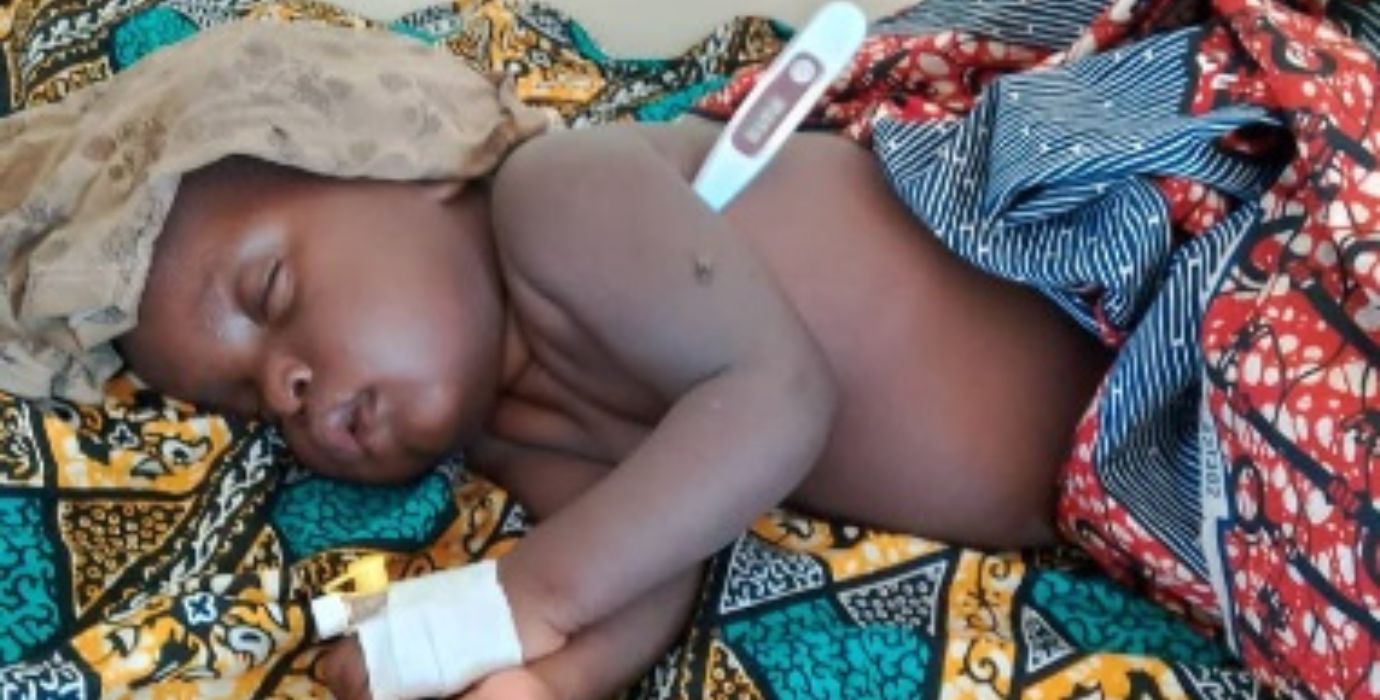
Jully’s mother feared for her child’s life. Health workers were reassuring but began treatment immediately. They sponged Jully with water, gave her paracetamol to reduce the fever, then started her on intravenous artesunate for severe malaria, intravenous ceftriaxone for the suspected bacterial meningitis, and diazepam to control convulsions.
Although national guidelines do not authorize primary healthcare units to administer injectable treatments, in the absence of sufficiently trained staff, CHAMPS has recruited qualified personnel and providing both formal training and on-the-job mentorship. As a result, the Nabiapai PHCU team was able to safely manage this emergency case.
After several days of treatment and monitoring, Jully’s condition improved. She recovered and was discharged home in stable condition.
Jully’s mother expressed deep gratitude to the staff and CMMB for strengthening the facility. Before CHAMPS restored services at Nabiapai PHCU, families in her village often traveled 25 miles (40 km) to reach the nearest health facility—journeys that were difficult and sometimes impossible during emergencies. Now, families in the area know that when a child becomes dangerously ill, lifesaving care is available close to home.